- Facebook, Instagram, Nextdoor, YouTube, and TikTok are the top platforms for pest control operations
- Set SMART goals before posting to ensure your efforts are measurable and tied to business outcomes
- Content mix should include education, testimonials, behind-the-scenes, and seasonal promotions
- Local targeting through geo-tags, Nextdoor, and location-based ads helps reach homeowners in your service area
- Consistency matters. Post 3 to 5 times per week and respond to comments and messages promptly
- Track four core metrics: engagement rate, reach, click-through rate, and conversion rate
---
How to Build a Social Media Presence for Your Pest Control Business
Social media is a powerful tool for pest control operations to connect with homeowners, build trust, and generate leads. Whether you run a small local operation or a growing team, social media can help you reach more customers, educate your audience, and stand out from competitors.
This guide walks you through how to create an effective social media strategy, from choosing the right platforms to posting content that drives real results.
Choosing the Right Social Media Platforms
Not all social media platforms are created equal, and pest control businesses need to focus on where their audience is most active. Here's a breakdown of the most effective platforms:
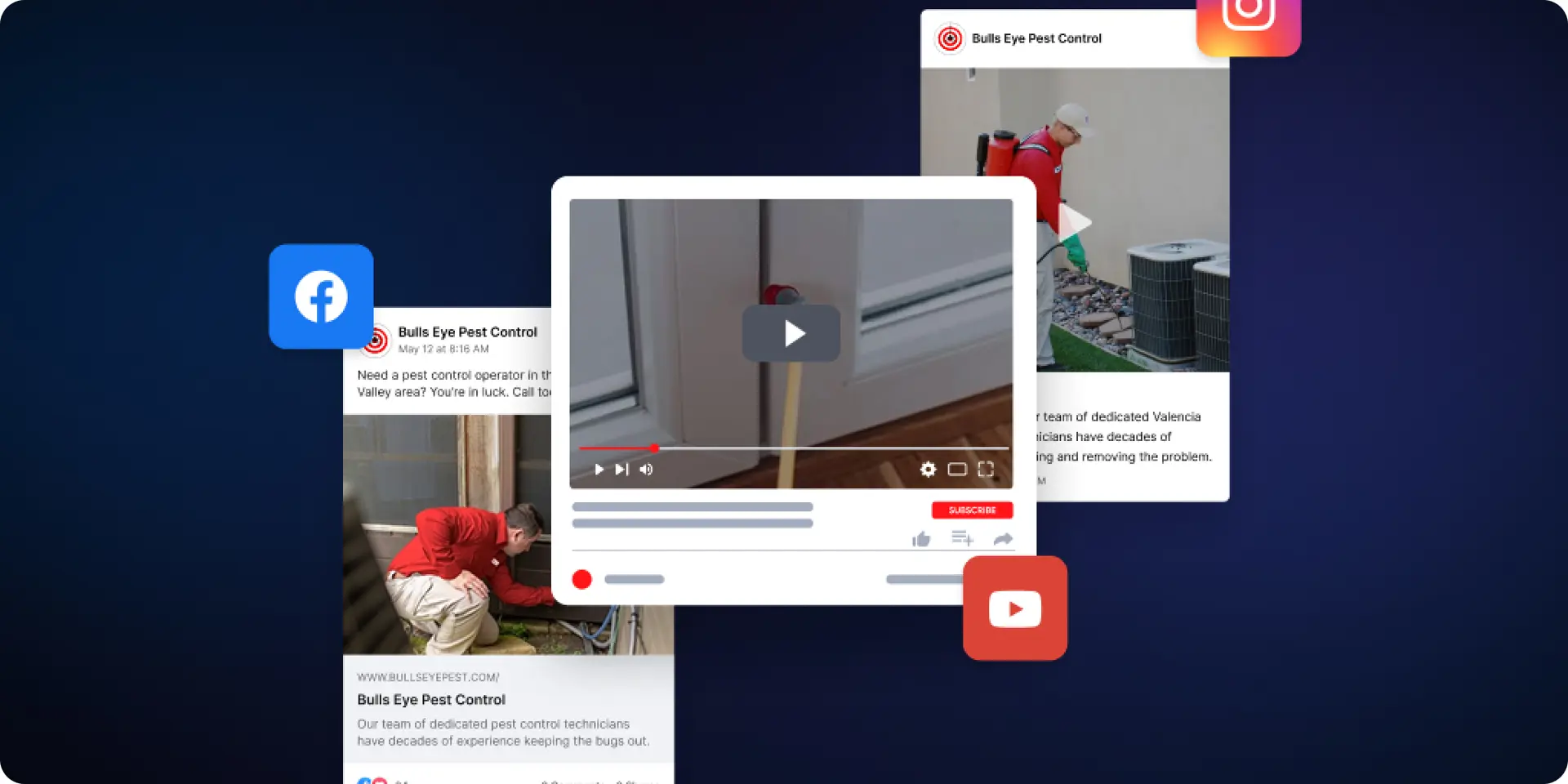
- Facebook: Best for community engagement, sharing customer testimonials, running local ads, and joining local groups where homeowners ask for pest control recommendations
- Instagram: Great for visual storytelling, before-and-after photos, pest prevention tips in carousel posts, and customer interaction through Stories and polls
- YouTube: Ideal for educational videos, service demonstrations, customer success stories, and FAQ videos addressing common homeowner pest concerns
- Nextdoor: A must-have for local operations to connect with homeowners in their service area. Engage in discussions, share expertise, and promote services in a neighborhood-focused environment
- TikTok: Works well for bite-sized educational content, debunking pest myths, showing behind-the-scenes work, and engaging a younger audience through humor and trending audio
Tip: Start with one or two platforms, build consistency, and expand as you gain confidence and engagement.
How to Build Your Pest Control Social Media Strategy
1. Define Your Goals
Before posting, determine what you want to achieve. Define your SMART goals: Specific, Measurable, Achievable, Relevant, and Time-bound. For example:
- Vague goal: "We want to get more engagement on social media."
- SMART goal: "We will post four pest control tips per week on Facebook and Instagram for the next 60 days to increase page engagement by 15%."
Common pest control social media goals:
- Increase brand awareness: Grow your following, reach more potential customers, and establish your operation as a trusted expert
- Generate more leads: Drive users to your website or contact form by running targeted ad campaigns and posting compelling offers
- Improve customer engagement: Foster interaction by responding to comments, answering questions, and sharing customer success stories
- Increase seasonal sales: Promote seasonal pest problems (e.g., termite control in spring, rodent control in winter) and post weather-related alerts (e.g., "Recent heavy rains could mean more mosquitoes. Schedule a treatment today!")
Key metrics to track:
- Engagement rate: Likes, shares, comments, and clicks on your posts
- Follower growth: The increase in followers over time
- Website traffic: How many visitors come to your site from social media
- Lead conversions: Appointments, calls, or service bookings generated from social media campaigns
Example Social Media Campaign
If your goal is to increase quality leads next month, structure a campaign like this:
Goal: "We will launch a four-week social media campaign posting four times per week on Facebook, featuring customer testimonials and educational content, to increase conversions by 2%."
Tracking Metrics: Monitor link clicks, call inquiries, and booked appointments.
2. Know Your Audience
Understanding who your customers are helps you tailor content to their needs. Ask yourself:
- What are the most common pest problems in my area? (e.g., termites, ants, rodents)
- What concerns do homeowners have about pest control? (e.g., safety of treatments, effectiveness, cost)
- What questions do customers ask before booking a service? (e.g., "How do I know if I have a termite infestation?")
Use this information to create content that answers homeowner concerns, provides solutions, and builds trust.
3. Create a Content Plan
Consistency is key to a successful social media presence. Plan your content in advance to ensure a steady flow of engaging posts. Your content mix should include:
- Educational posts: Pest prevention tips, seasonal pest trends, and DIY tips
- Behind-the-scenes content: Show your team in action, from inspections to treatments, and highlight your expertise
- Customer testimonials and success stories: Highlight real experiences to build trust and provide social proof
- Interactive posts: Polls, Q&A sessions, quizzes, and challenges to engage your audience
- Local updates: Community events, neighborhood alerts, and seasonal service reminders tailored to your service area
- Fun and engaging content: Lighthearted memes about common pest problems, humorous customer interactions (with permission), and team spotlights
Best practices for creating engaging content:
- Keep it visual: Posts with images or videos receive significantly higher engagement than text-only posts
- Be authentic: Showcase your team, customer interactions, and day-to-day operations to humanize your brand
- Use storytelling: Create content that tells a story, whether it's a customer's experience, a challenging pest job, or the journey of your operation
- Encourage interaction: Ask your audience questions, invite them to share their own pest experiences, and create polls or quizzes to engage them
- Post consistently: Develop a content calendar to ensure regular posting and keep your brand top-of-mind for potential customers
If creativity isn't your strong suit, get the support you need from Scorpion's content experts to help you produce high-quality, engaging content your audience craves. You can repurpose this content across social media, landing pages, email campaigns, and more to maximize its impact.
How to Advertise and Grow Your Pest Control Audience on Social Media
1. Run Local Social Media Ads
Social media ads are a cost-effective way to reach new customers in your area. Here's how to make them work:
- Target the right audience: Use location-based targeting to ensure your ads reach homeowners in your service area
- Use compelling visuals and messaging: Include high-quality images or short videos showing your services in action. Highlight customer reviews or limited-time offers to encourage action
- Test different ad formats: Try carousel ads, video ads, and lead generation ads to see what resonates best with your audience
- Promote seasonal services: Run targeted ads before peak pest seasons (e.g., termite season in spring, mosquito control in summer) to capture leads when demand is high
- Retarget website visitors: Use retargeting ads to reach users who have visited your site but didn't book a service, keeping your brand top-of-mind
2. Engage with Your Community
Social media isn't just about posting. It's about building relationships. Be active by:
- Responding to comments and messages promptly: Quick responses build trust and increase the likelihood of a customer booking a service
- Joining local Facebook groups and Nextdoor discussions: Provide helpful advice and become a trusted source of information in your community
- Hosting live Q&A sessions: Go live on Facebook or Instagram to answer common pest control questions and interact with potential customers in real time
3. Collaborate with Local Businesses
Partnering with home service providers can expand your reach. Consider partnering with:
- Landscapers and lawn care companies: Pest issues often stem from outdoor conditions, such as overgrown vegetation or standing water, which landscapers frequently address
- Home cleaning services: Customers who invest in regular home cleaning may also want preventative pest control services to keep their homes in top shape
- Real estate agents and property managers: New homeowners and rental properties often require pest inspections and treatments before move-in
- Home inspectors: Many home buyers request pest inspections along with structural and safety checks before purchasing a property
- Restoration and water damage companies: Water damage can lead to increased pest activity, making a partnership with restoration professionals mutually beneficial
How to build strong business partnerships:
- Create a cross-referral agreement: Offer mutual referrals with an incentive for every customer sent your way (e.g., "Refer a client for a termite inspection and earn a service discount.")
- Bundle services for special offers: Offer combined home service packages (e.g., "Pest Control + Lawn Treatment Package" or "Move-In Ready Home Inspection + Pest Treatment")
- Feature each other in marketing: Promote your partners in blog posts, email newsletters, and social media to expand reach and visibility. Invite local business owners to create guest posts or videos sharing expert advice related to home maintenance
- Network locally: Attend industry trade shows, join local business groups, and participate in Chamber of Commerce events to connect with potential partners
- Develop an exclusive homeowner discount: Provide special pricing for customers referred by your partners to create extra value and encourage cross-service use
By forming strategic partnerships, pest control operations can expand their reach, gain more referrals, and provide additional value to homeowners in their community.
How to Track Your Social Media Performance
1. Key Metrics to Measure
Tracking performance helps you understand what's working and what needs improvement. Focus on these metrics:
- Engagement rate: The percentage of people who interact with your posts (likes, comments, shares) compared to those who see them
- Reach and impressions: How many people see your content and how often it appears in their feeds
- Click-through rate (CTR): The number of users who click on your website links or contact buttons from your posts
- Conversion rate: The percentage of social media visitors who complete a desired action, like booking a service or requesting a quote
2. How to Adjust Your Strategy Based on Data
Once you analyze your metrics, refine your strategy based on what works best:
- Double down on high-performing content: If a certain type of post (e.g., pest prevention tips) gets more engagement, create more of it
- Post at optimal times: Review insights to see when your audience is most active and schedule posts accordingly
- Test different ad creatives: If an ad isn't delivering results, tweak the image, copy, or offer to improve performance
- Experiment with new formats: Try Instagram Reels, Facebook Stories, or YouTube Shorts to see if they attract more engagement than static posts
8 Social Media Best Practices for Pest Control Operations
Here are some extra tips and best practices to help maximize your online presence:
1. Maintain a Consistent Posting Schedule
Social media success requires regular and consistent posting to keep your audience engaged.
- Use a content calendar to plan posts in advance
- Post at least 3 to 5 times per week on active platforms like Facebook and Instagram
- Schedule posts using tools like Meta Business Suite (for Facebook and Instagram) or Hootsuite
- Experiment with different posting times to see when your audience engages the most
2. Use Video Content to Increase Engagement
Videos are one of the most effective ways to capture attention and keep potential customers engaged.
Video ideas for pest control operations:
- Time-lapse videos of pest treatments in action
- Before-and-after footage showing successful extermination
- Short educational clips explaining common pest behaviors (e.g., "Why do ants invade your kitchen?")
- Behind-the-scenes content showcasing your team and equipment
- Live Q&A sessions answering pest control FAQs
Tip: Keep videos short and engaging (30 to 60 seconds for social media posts, 3 to 5 minutes for YouTube).
3. Optimize for Local Social Media Visibility
Many homeowners search for services locally, so optimizing your content for local visibility is key.
- Use geo-tags and location hashtags on posts (e.g., #HoustonPestControl #PhoenixExterminators)
- Encourage customer check-ins at your business location on Facebook
- Join local Facebook groups and Nextdoor discussions where homeowners ask for pest control recommendations
- Engage with other local businesses and community pages to increase brand exposure
4. Use Story Features for Quick Engagement
Stories on Facebook, Instagram, and TikTok are an easy way to stay in front of your audience without requiring permanent posts.
- Share behind-the-scenes content from service calls
- Post quick tips on pest prevention
- Run polls and Q&A sessions to encourage engagement (e.g., "Have you seen more spiders this fall? Yes/No")
- Use countdowns for seasonal promotions
Tip: Since Stories disappear in 24 hours, they're great for sharing limited-time offers and quick updates.
5. Respond to Comments and Messages Quickly
Social media is a two-way conversation. Engagement builds trust and increases the chances of converting a follower into a customer.
- Respond within a few hours to inquiries about services
- Use Facebook Messenger auto-replies to acknowledge messages and direct leads to booking pages
- Thank customers who leave positive comments or reviews
- Address negative feedback professionally and try to resolve issues publicly before moving to private messages
6. Promote Seasonal Pest Control Services
Pest problems change with the seasons, so tailor your content to highlight seasonal threats.
Ideas for seasonal social media posts:
- Spring: Termite swarming season, ant control, and mosquito prevention
- Summer: Rodent control, wasp nest removals, and backyard pest treatments
- Fall: Rodents seeking shelter indoors, spider activity, and fall pest-proofing
- Winter: Overwintering pests (stink bugs, cluster flies) and insulation services
Tip: Remind homeowners ahead of time (e.g., “Mosquito season is coming! Get your yard treated now before they take over.”).
7. Share Customer Testimonials and Success Stories
People trust real customer experiences, so highlighting testimonials on social media is a great way to build credibility.
- Post direct quotes from satisfied customers with their permission
- Share before-and-after treatment images showing pest removal results
- Record short customer video testimonials
- Create graphics featuring 5-star reviews from Google or Yelp
Tip: Encourage customers to tag your operation when they post about their experience so you can reshare their content.
8. Educate Homeowners with Quick Tips and DIY Advice
Social media should provide value, not just sales pitches. Share useful pest control tips that homeowners will appreciate.
Examples of engaging educational posts:
- "Don't let ants take over! Keep crumbs off the counter and seal food containers. Need help? We've got you covered!"
- "Termites love moisture! Fix leaky pipes and ensure good drainage to prevent infestations."
- "Seeing small droppings? It could be rodents. Give us a call for an inspection."
Tip: The more helpful you are, the more likely homeowners are to trust you when they need professional services.
Build Your Social Media Strategy Today
A well-planned social media presence can set your pest control operation apart, helping you attract more customers and build trust in your community. By choosing the right platforms, creating engaging content, and running targeted ads, you can turn social media into a powerful marketing channel.
Want expert help growing your social media presence? Scorpion's digital marketing solutions, including RevenueMAX, ensure you get the right leads and grow your operation efficiently.
Request a demo today to see how Scorpion can help your pest control operation thrive.


